R.E.A.L. Aquatic Physical Therapy
Heal in Water
Harness the therapeutic power of warm water — buoyancy, resistance, and hydrostatic pressure — for rehabilitation that's gentler on your body and powerful in its results.
R.E.A.L. Aquatic Physical Therapy
Harness the therapeutic power of warm water — buoyancy, resistance, and hydrostatic pressure — for rehabilitation that's gentler on your body and powerful in its results.
Evidence-Based Healing
Aquatic physical therapy uses the unique properties of warm water — heated to 92–96°F — to create an ideal environment for rehabilitation, pain relief, and recovery.
When you enter our therapeutic pool, water's natural buoyancy reduces the gravitational stress on your joints by up to 90%, allowing movement that may be impossible or painful on land.
Why Water Works
Water creates a therapeutic environment that accelerates healing and enables exercise that simply isn't possible on land.
Buoyancy offloads up to 90% of body weight, dramatically reducing pain during movement and exercise.
Begin mobilization sooner after surgery with reduced impact, supporting faster return to daily activities.
Water provides a safe environment to practice balance — if you lose footing, the water supports you. No fall risk.
Warm water relaxes muscles and increases tissue elasticity, making it easier to improve flexibility and joint movement.
Water provides natural, consistent resistance in all directions — strengthening muscles without impact or heavy weights.
Hydrostatic pressure aids circulation and enables aerobic exercise at lower heart rates with less strain on the body.
Hydrostatic pressure acts as gentle, uniform compression, reducing edema and inflammation throughout immersed tissues.
The supportive water environment helps rebuild trust in your body's ability to move, reducing fear of re-injury or falling.
Tailored Care
Aquatic therapy is especially effective for patients who find land-based exercise too painful, risky, or challenging.
Hip & knee replacement recovery when land PT is too painful
Gentle movement in warm water soothes stiff, inflamed joints
Stroke, Parkinson's, and MS patients benefit from supported movement
Herniated discs, stenosis, and back pain respond well to buoyancy
Train balance safely — water catches you if you lose your footing
Warm water therapy eases widespread pain and improves function
Maintain fitness while injured with low-impact aquatic training
Older adults regain independence through safe, supported exercise
Clinical-Grade Environment
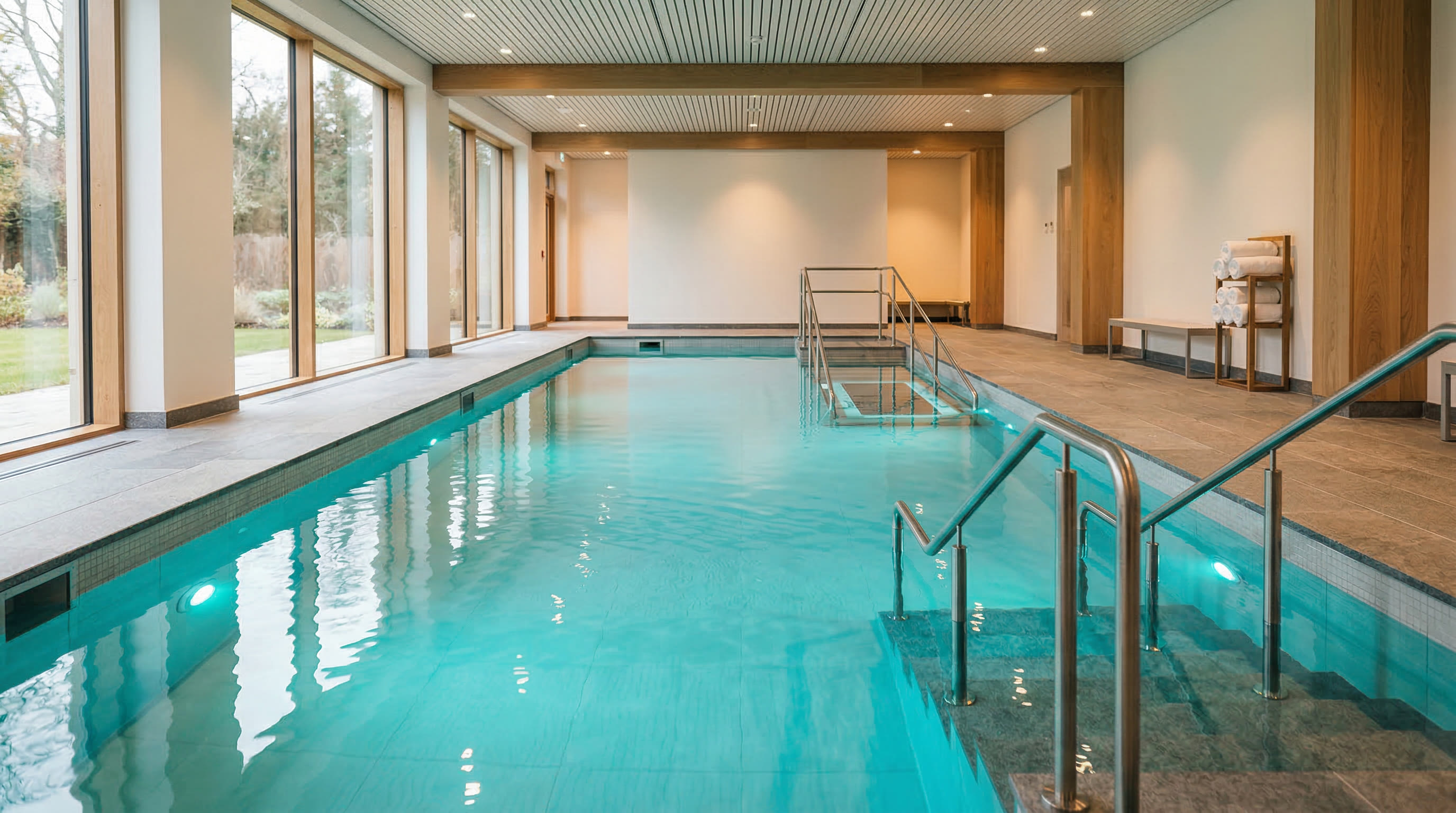
Our aquatic therapy center is designed exclusively for rehabilitation — not recreational swimming. Every element is purpose-built for your recovery, from water temperature to pool depth.
Unlike community pools, our clinical-grade facility maintains strict therapeutic standards with private treatment sessions and one-on-one care from your physical therapist.
Understanding Your Options
Many patients benefit from combining both approaches. Here's how aquatic therapy complements traditional land-based physical therapy.
| Factor | Aquatic PT | Land-Based PT |
|---|---|---|
| Joint stress during exercise | Up to 90% reduced | Full body weight |
| Early post-surgical rehab | Earlier mobilization | May need to wait longer |
| Fall risk during balance training | Virtually eliminated | Present, requires spotting |
| Pain during movement | Significantly reduced | Can be limiting |
| Resistance training | Omnidirectional water resistance | Gravity + weights / bands |
| Swelling management | Hydrostatic pressure helps | Compression + elevation |
| Functional land tasks | Limited (stairs, terrain) | Directly practiced |
| Sport-specific training | Early-stage conditioning | Full sport simulation |
Many patients progress from aquatic therapy to land-based therapy — or use both simultaneously for the best outcomes.
What to Expect
We make your first visit comfortable and informative. Here's what a typical aquatic therapy session looks like.
Bring a swimsuit, towel, and water bottle. We provide private changing rooms with showers. Arrive 15 minutes early on your first visit for intake paperwork.
Your physical therapist reviews your medical history, discusses your goals, and performs a brief assessment of your range of motion, strength, and pain levels.
Enter the pool via stairs or ramp at your own pace. The water is heated to 92–96°F — noticeably warm and immediately relaxing. You'll acclimate quickly.
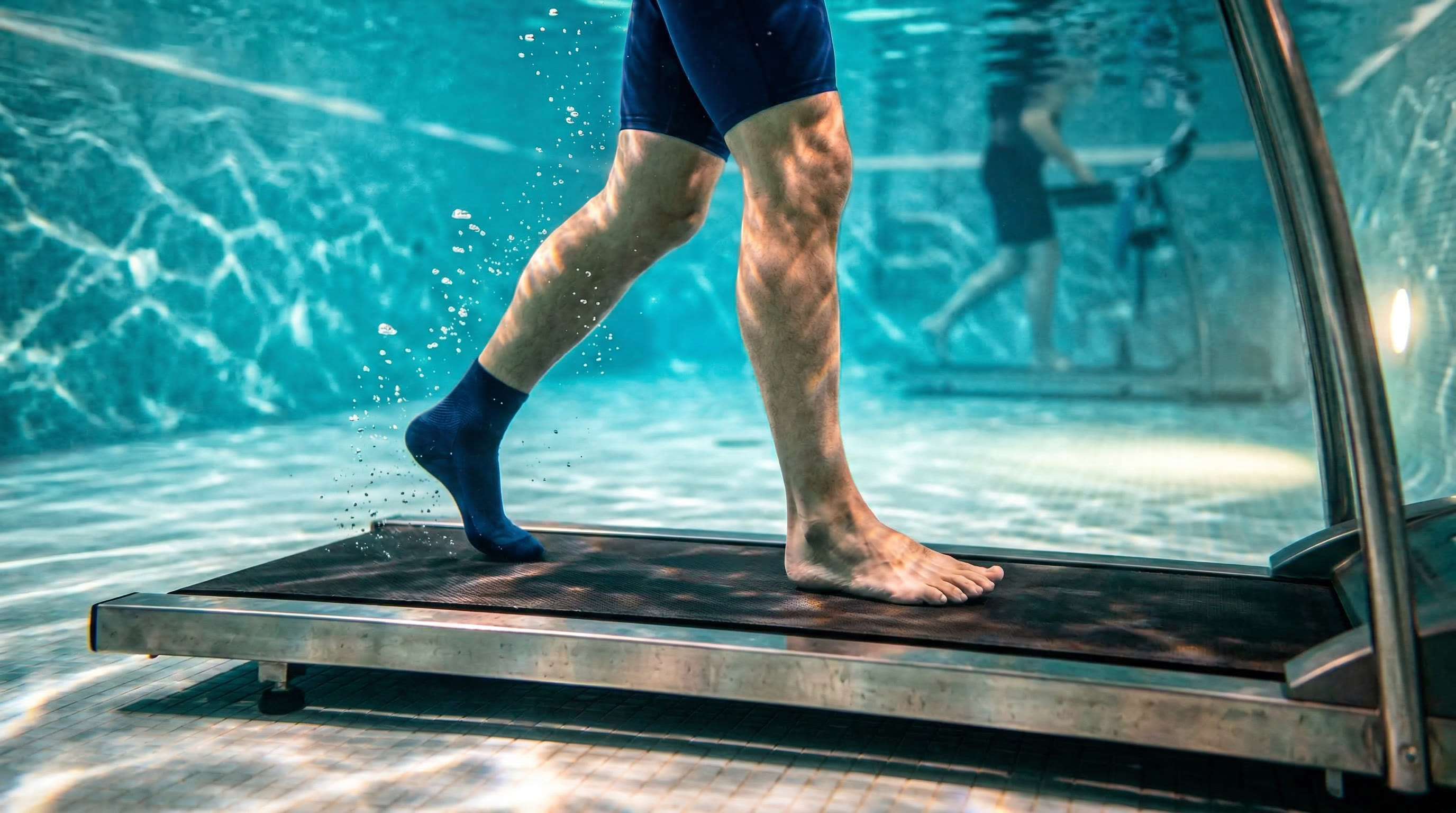
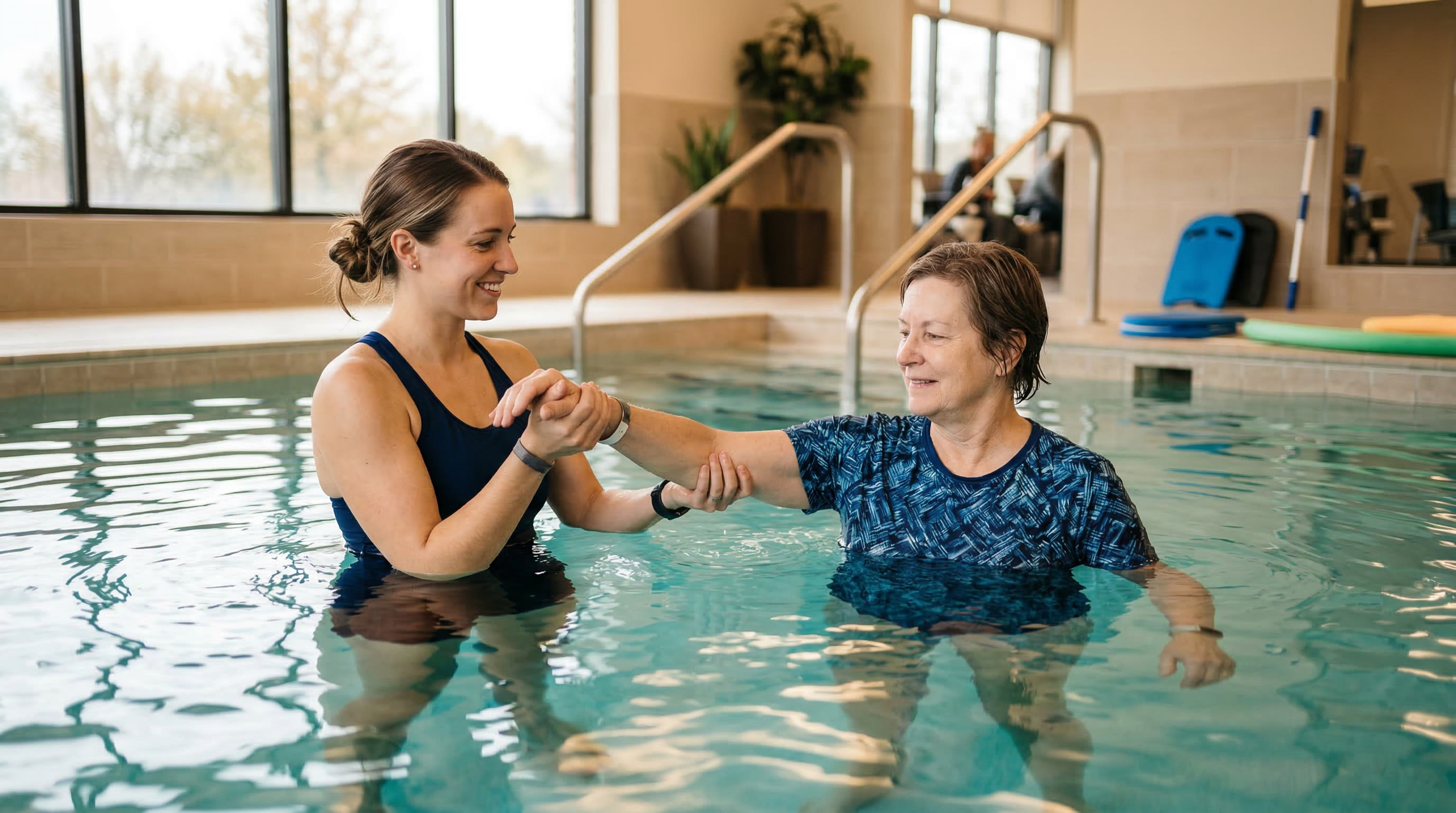
Your therapist is in the pool with you, guiding every exercise. Activities are tailored to your condition — walking, stretching, strengthening, balance training, or using our underwater treadmill and resistance jets.
Sessions last 45–60 minutes. Afterward, your therapist discusses your progress, adjusts your treatment plan, and schedules your next visit. Most plans involve 1–3 sessions per week.
Common Questions
Take the first step toward pain-free movement. Schedule your evaluation and discover how aquatic therapy can transform your rehabilitation journey.
Schedule Your Evaluation